AI is changing utilization management, but not in the way many expected.
AI in Healthcare
Utilization Management
For years, healthcare conversations around AI have focused on automation replacing manual work entirely. In utilization management, that narrative often sounds appealing: faster decisions, fewer administrative delays, and lower operational burden.
The organizations seeing meaningful results with AI today are using AI to reduce friction, organize information faster, streamline workflows, and improve visibility across increasingly complex healthcare operations.
The strongest AI use cases in medical UM are operational: structuring information, reducing friction, and improving visibility.
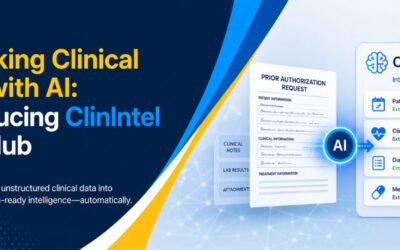
Extract Data
Turn unstructured clinical documents into cleaner, more usable information.
Reduce Intake
Minimize repetitive administrative work and reduce operational friction.
Find Gaps
Identify missing information earlier so teams can respond before delays grow.
Route Faster
Accelerate routing and prioritization so the right work reaches the right team sooner.
Faster access to cleaner, more actionable information.
AI cannot replace clinical accountability
One of the biggest misconceptions is that AI can independently manage complex utilization management decisions at scale.
Medical UM involves incomplete documentation, policy nuance, exception handling, regulatory considerations, and member-specific variables.
AI works best as an enhancement layer
AI can support workflows and surface insights, but human expertise still plays a critical role in interpretation, oversight, and accountability.
The strongest organizations use AI to strengthen teams, not remove them from the process.
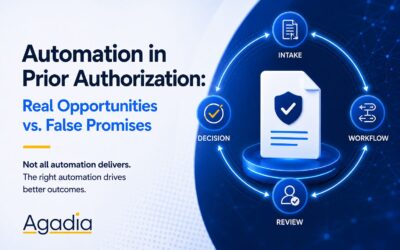
It performs best when it helps information move through the authorization lifecycle more cleanly, consistently, and intelligently.
Clinical Documentation
AI Extraction
Structured Summary
Clinical Review
Decision Support
Even advanced AI tools struggle inside disconnected environments. Interoperability is becoming just as important as automation itself.
Connected Workflows
Reduce fragmentation across the authorization lifecycle.
Centralized Visibility
Give teams a clearer view of work, status, and next steps.
Structured Exchange
Support cleaner movement of data between systems.
FHIR Interoperability
Improve how information moves across modern healthcare operations.
Healthcare utilization management ultimately depends on trust: accuracy, consistency, clinical appropriateness, and compliance.
AI Supports
Data extraction
Workflow routing
Missing information detection
Clinical summary organization
People Provide
Clinical interpretation
Policy judgment
Exception handling
Oversight and accountability
AI performs best when reducing operational friction.
Human oversight remains essential.
Connected systems improve AI effectiveness.
Workflow orchestration matters more than automation alone.
The future of UM is collaborative, not fully autonomous.
AI is already reshaping medical utilization management.
Long-term success will come from building smarter systems that combine intelligent automation, connected workflows, and human expertise.
Agadia helps health plans bring intelligent automation, interoperability, and operational clarity into the utilization management lifecycle through solutions like PAHub and ClinIntel.