
Smarter Utilization Management for Better Outcomes
Agadia supports medical procedures, services, and pharmacy utilization management on a single, intelligent platform—automating decisions, reducing delays, and supporting compliance every step of the way.

Support the right care for the right member at the right time.
Utilization management helps health plans ensure medical services are clinically appropriate, cost-effective, and aligned with evidence-based guidelines. It includes prior authorization, concurrent review, and retrospective review to manage care quality, improve outcomes, and control costs.
One platform. Unified experience. Better results.
Many health plans manage authorizations for medical procedures, inpatient and outpatient services, and pharmacy benefits separately—creating inefficiencies, delays, and inconsistent decisioning. Agadia brings these workflows together on a single platform to streamline reviews, align clinical criteria, and improve provider and member experience.
- Inpatient and outpatient procedures, surgical services, DME, imaging, and medical benefit drugs
- Often manual and highly complex
- Clinical documentation heavy
- Case review across multiple data sources
- Drugs paid under medical benefits
- Retail and specialty medications
- More standardized workflows
- Formulary-driven criteria
- Requires seamless member and provider communication
- Drugs paid under pharmacy benefits
Automate clinical decisions with ClinIntel.
Manual clinical review slows down decisions, increases administrative burden, and introduces variability across workflows.
PAHub helps transform prior authorization decisioning by combining intelligent data extraction, evidence-based criteria automation, configurable workflows, and real-time data exchange into one connected process.
The result is faster turnaround times, fewer manual reviews, stronger auditability, and more consistent decisions across medical and pharmacy utilization management.
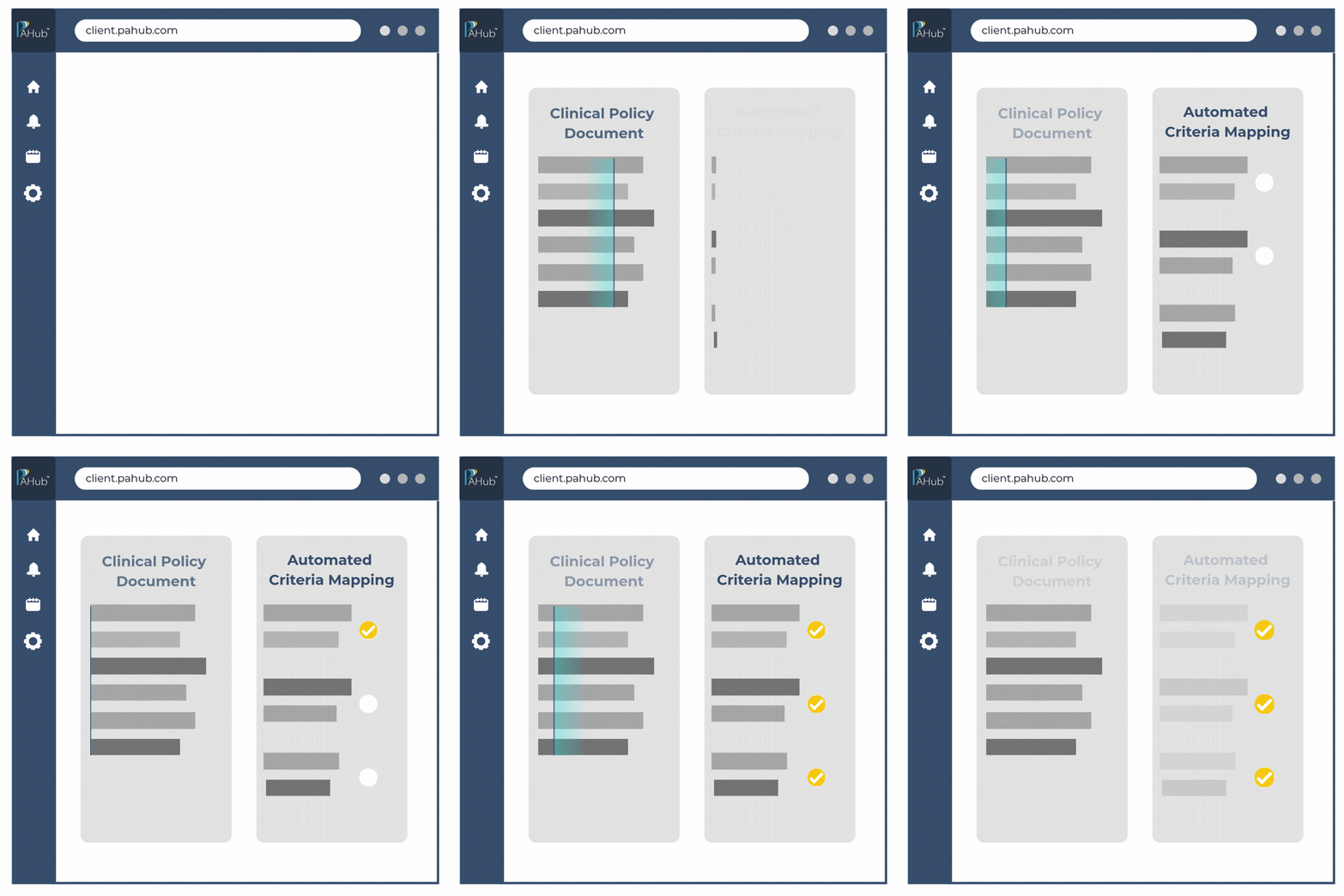
PAHub’s Automated Decision Engine
Three connected capabilities work together to support faster, more accurate, and more compliant prior authorization workflows.

CriteriaBuilder
Automatically converts clinical guidelines and policies into structured criteria, question sets, and workflows with speed and accuracy.

ClinIntel
Extracts and interprets unstructured clinical data from faxes, attachments, documents, and clinical records to power intelligent decision automation.

FHIR/0057-F
Supports FHIR-based prior authorization workflows, standardized data exchange, status tracking, and CMS-0057 interoperability readiness.
FHIR integration with EMRs and provider workflows.
Connect clinical data, provider workflows, and prior authorization decisions in one streamlined process.
Disconnected systems create friction for providers and delays for members. PAHub is designed to support FHIR-based interoperability, electronic medical records, EHR systems, provider portals, and API-driven data exchange.
By reducing fax-based intake, improving data accuracy, and enabling faster electronic prior authorization workflows, Agadia helps organizations modernize utilization management while preparing for CMS-0057-F requirements.

How PAHub Connects the Prior Authorization Ecosystem
From provider systems to decision outcomes, PAHub helps unify the data and workflows needed for faster, more transparent prior authorization.
 Electronic Medical Records
 EHR Systems
 Provider Portals
 FHIR APIs for CMS-0057-F readiness
 Real-Time Data Exchange
 Secure & Compliant
 Configurable Workflows
 Faster, More Accurate Decisions
 Faster electronic prior authorizations
 Accurate and complete information
 Better provider and member experience
Support complex care across a wide range of clinical scenarios.
Agadia helps health plans manage complex clinical review with workflows tailored to specialty care, medical benefit utilization, and cross-benefit coordination.
Inpatient Services
Automated approvals for hospital stays, surgeries, and other inpatient care.
Outpatient Services
Efficient authorizations for procedures, therapies, and outpatient care.
Aftercare Services
Seamless approvals for recovery, rehab, home health, and continuing care.
Intelligent Automation at Every Step
DME
Streamlined approvals for durable medical equipment and supplies.
Radiology
Faster authorizations for imaging and diagnostic services.
Oncology
Intelligent review for complex treatment plans and high-cost therapies.
Specialty Medications
Cross-benefit workflows for medications covered under medical or pharmacy benefits.
PAHub automates prior authorizations for all medical procedures and services. The examples above represent just a few high-impact areas where automation can reduce delays, improve consistency, and streamline provider workflows.
Built for compliance and audit readiness.
Health plans face increasing regulatory pressure around prior authorization timelines, transparency, and interoperability. Agadia helps you stay compliant and audit-ready.
PAHub enables customers to readily obtain information and reports required for regulatory audits.
- Meet CMS-0057-F requirements
- Support electronic prior authorization APIs
- Maintain audit-ready documentation
- Track turnaround times and reporting
Built for medical UM complexity.
PAHub helps health plans manage medical procedure and service reviews with configurable workflows, consistent criteria application, and audit-ready documentation.
Extensive utilization management expertise, dedicated support, and continuous innovation.
Agadia is more than a technology provider. We are a long-term business partner with deep expertise in utilization management, payer operations, compliance, and automation.
Customers receive dedicated account teams that support them every step of the way—from implementation and training to ongoing optimization. We continue working closely with our customers to gather feedback, evaluate their growing needs, and incorporate those insights into our product roadmap to bring new enhancements as the healthcare industry evolves.
 Dedicated Account Teams Hands-on support from people who understand your workflows, goals, and operational priorities.
 UM Domain Expertise Guidance rooted in deep experience across medical and pharmacy utilization management.
 Customer-Driven Roadmap Continuous enhancements informed by customer feedback, regulatory change, and evolving industry needs.